|
In 1104, a young priest by the name of Ailbertus van Antoing appeared in the Land of Rode, accompanied by two followers. It was their wish to found a religious community somewhere since they had become dissatisfied with the lack of discipline in the collegiate church at Tournai (in present-day Belgium) from where they came. Adelbert, Count of Saffenberg from Mayschoß an der Ahr (in the German Eifel), who was in possession of the castle in Herzogenrath, gave them permission to settle on a tract of his land and to build a small chapel. The wealthy Embrico von Mayschoß and his family decided to join Ailbertus and donated all his possessions to the young community. In 1106, they started to build a stone crypt and laid the foundations to the future monastic church. The crypt was finished in 1108.
After a difference of opinion with Embrico, Ailbertus departed in 1111. He died in Sechtem, near Bonn in 1122. In 1895, the bones, thought to be those of Ailbertus, were transferred to Rolduc and interred in the crypt built by himself and Embrico. The first abbot of the monastic community was Abbot Richer who came from Rottenburch in Bavaria. The community was made up of canons regular (Augustinians) who initially lived according to extremely strict principles. Community life, prayers, lack of possessions, fasting and manual work were all part and parcel of the daily cycle.  The abbey was called Kloosterrade, and later, from the 18th century onwards, the French name for Herzogenrath (Rode-le-Duc = Rolduc) was adopted.
After guardianship of the abbey fell into the hands of the Duchy of Limburg in 1136, Kloosterrade was considered to be their family church. Several dukes are buried at Rolduc, such as Walram III. His tombstone can be found in the main aisle of the church. 
From the mid-12th century to the end of the 13th century the abbey flourished. In 1250 the abbey owned more than 3,000 hectares of land and the number of regulars grew steadily. The library developed into one of the most important of its age and the Abbey provided pastoral and spiritual care to many parishes throughout the Netherlands. Other communities were founded by Kloosterrade: Marienthal in the Ahr valley of the Eifel, Sinnich near Aubel (B) and Hooidonk near Eindhoven. Five communities in Friesland were placed under the authority of the Abbot of Kloosterrade, the most important of these being the Abbey of Ludingakerke. During the 14th, 15th and 16th centuries times were harder for Kloosterrade in both spiritual and material terms. The buildings and fabric paid a heavy price during the Eighty Years War. After ca. 1680, abbots Van der Steghe and Bock succeeded in introducing a more disciplined regime in the community, despite the strident protests of most regulars. Materialistically, the abbey began to prosper once again and revenue was generated from the exploitation of the coal mines. In around 1775, Kloosterrade employed 350 mineworkers. The abbey was dissolved by the French occupiers in 1796 and the canons regular were forced to leave the community.
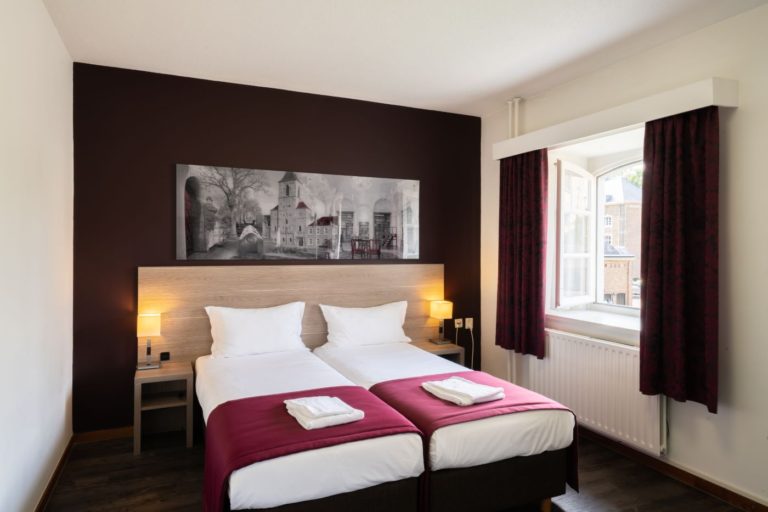
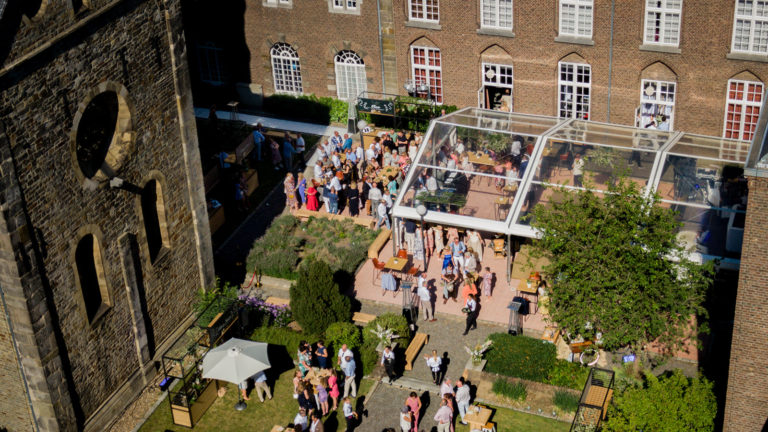
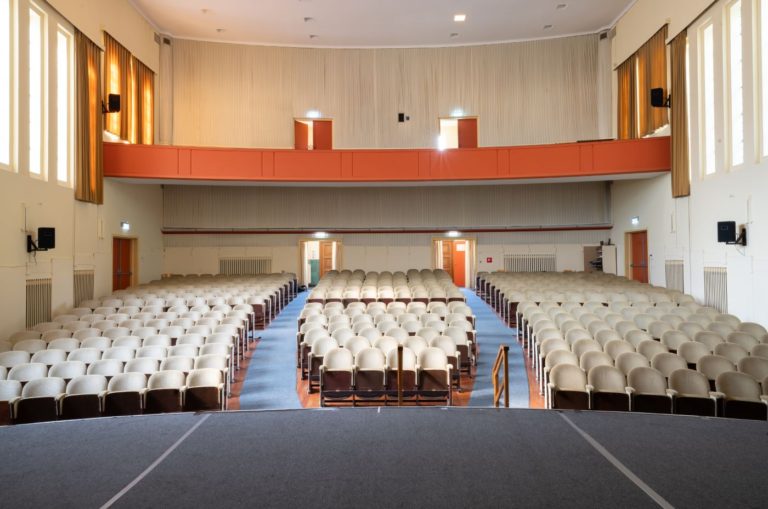
The buildings at Rolduc stood empty for 35 years, before Rolduc was recommissioned for use as a seminary by the Diocese of Liège. After Belgian independence, this seminary moved to St. Truiden in Belgium and Rolduc became a boarding (grammar) school for boys from well-to-do Dutch families. From 1946 to 1967, the buildings were used to accommodate a seminary, but now under the auspices of the Diocese of Roermond. The boarding school closed in 1971. Since then, the former abbey has been home to the Rolduc hotel and conference centre (Conferentieoord & Hotel Rolduc) the seminary of the Diocese of Roermond and College Rolduc, a secondary school. In order to maintain the cultural and spiritual heritage of Rolduc, there is close contact with Stichting Lève Rolduc and other interested organisations.
|